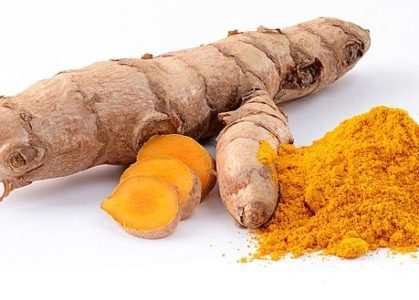
 In my line of work, I get a lot of people asking me about holistic remedies or alternative options to traditional manufactured opioids. I love when a patient is clearly committed to helping themselves find a solution, but sometimes they dive into the internet message boards and end up trying solutions with little clinical backing. Sometimes these alternative options can provide just the placebo effect the patient needs, while other times they can cause problems by failing to treat the underlying condition in a timely manner.
One over-the-counter option that I’ve been asked about is tumeric. Tumeric is a plant native to South Asia, and it’s one of the fastest-growing supplements in America, with sales topping $320 million in the US just last year. If that many people are buying it, it must be effective, right? Let’s take a closer look at what science has to say.
What Is Tumeric?
Tumeric is a flowering plant, known as Curcuma longa, and it’s a plant in the ginger family. The active ingredient in Tumeric is curcumin, but it only makes up about three percent of the dried spice. Many bottles advertised as tumeric will actually list curcumin on the ingredient label, but it’s one in the same.
Tumeric has been championed as a way to lower cholesterol, treat depression, prevent gingivitis, cure hangovers and even help with symptoms of chronic pain. It would be great if it could do all that, does can science back up those claims? According to research here in our own back yard, its benefits can’t be scientifically proven.
“There are claims that it can cure everything,” said Kathryn M. Nelson, a research assistant professor at the University of Minnesota and lead author of a study on the spice. “To me, that is a red flag,” she said after failing to confirm any of the purported benefits with scientific evidence.
Another study led by Dr. Amit X. Garg, a professor of medicine at Western University in London, Ontario, yielded similar results. In a randomized clinical study of more than 600 patients, there was little difference in the patients who took tumeric or the placebo for potential issues after elective heart surgery.
“It was a bit disappointing, but we couldn’t demonstrate any benefit used in this setting,” Dr. Garg said.
Finally, the National Center for Complementary and Integrative Health believes there’s not enough reliable evidence to recommend tumeric or curcumin for any medical condition. There has been some clinical evidence that tumeric has some benefits at the cellular level and in animal testing, but the benefits of preclinical research hasn’t been observed in clinical trials involving humans.
At the end of the day, there are many other proven ways to treat pain conditions and other health ailments, so opt for treatments with a better track record of success. To start your journey to better health, reach out to a pain specialist like Dr. Cohn today.
 Chronic pain can make any day a pain, but some days are just worse than others. Halloween is one of those days that many people with chronic pain want to avoid, but with a little foresight and planning, you can not only survive, but thrive this Halloween if you have chronic pain.
 In the wake of increasing opioid overdoses across the country, lawmakers have called for much stricter regulations in how providers prescribe opioids to patients. The goal of the changes were to stop doctors from “taking the easy road” and prescribing opioids to patients because the doctor doesn’t want to take the time to dig into the problem and work towards a real solution. Lawmakers also undoubtedly thought that if fewer people have access to clinical opioids that overdoses would also decrease.
 As someone who has suffered from chronic back pain for more than a decade, I know just how hard it can be to manage a chronic condition on a daily basis. You have good days where you feel like you can conquer the world, and you have bad days where you don’t even want to get out of bed. No matter what kind of day you’re having, it’s important that you push through any discomfort and find time to
  Chronic pain is usually different from acute pain. Acute pain is considered to be directly related to stimulation of sensory receptors for noxious stimuli located throughout the body. It is often related to direct damage or trauma to the body. It also is the normal physiologic response to the various types of sensory receptors that is perceived as noxious or painful. Acute pain is relatively short lasting and is a direct response to direct stimulation of sensory receptors with lengths from seconds to usually less than several months. Chronic pain however is long in duration, lasting over three months and becomes independent of direct stimulation of sensory receptors for acute stimuli.