
Complementary Approaches Beneficial For Chronic Pain Patients

meditation painNew research out of the Hospital for Special Surgery in New York found that complementary treatment approaches can help curb pain and in some instances reduce the need for opioids in patients with chronic pain.

“Opioid misuse and addiction are a major public health issue in the United States, and approximately 70 percent of individuals who use opioids on a long-term basis have a musculoskeletal disorder, such as low back pain or arthritis,” said Maggie Wimmer, coordinator of Programs and Outcomes, Public and Patient Education at HSS. “To address this epidemic, Hospital for Special Surgery implemented a Pain and Stress Management program in its orthopedic clinic to enhance patient knowledge and encourage complementary practices as alternatives to medication.”

For the study, the center recruited 122 participants and asked them to participate in a couple different meditation techniques. Patients took part in a monthly in-person meditation workshop and a weekly meditation conference call where they practiced mindful breathing techniques and other meditation activities. Patients also completed a monthly survey on a number of factors, including pain and stress levels, their understanding of complementary medical approaches and how often they practiced the techniques in their own time.

Study Findings

After analyzing the data, researchers uncovered:

  • 98 percent of patients said they were satisfied with the program.
  • 95 percent said the program increased their understanding of complementary treatments and how they can help manage pain and stress.
  • 93 percent said they would recommend the program to others.
  • 1 in 3 patients reported using alternative techniques five or more times in the previous week in place of medication, and 11 percent used the techniques three or four times in place of medication.
  • More than 50 percent of participants reported that their mindful breathing techniques helped them manage their stress and chronic pain.
  • During monthly in-person sessions, many participants also reported an improvement in daily function, calmness and an improved state of mind.

“The results indicate that alternative approaches are effective in reducing pain and stress, and in improving self-management and general well-being,” said Robyn Wiesel, associate director, Public and Patient Education at HSS.

This is something that we’ve been preaching on the blog for years now. You need to have more than one way to treat your pain condition, and these complementary approaches can work wonders. Whether it’s yoga, balance training, mindful meditation, cycling or swimming, find an activity that allows you to de-stress and strengthen your body. Not only will you have physical and psychological benefits, but it may reduce your reliance on opioids!
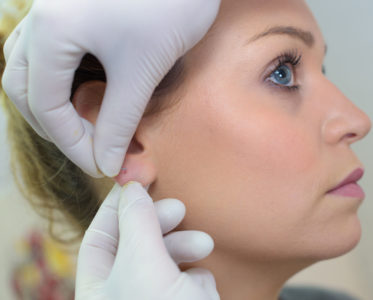
Which Ear To Get The Daith Piercing In?

which ear pierceThe following is a guest post from Leticia, a reflexologist and state certified piercer. She reached out to us with some more information on the Daith piercing, and we wanted to turn her message into a blog post because we feel that our readers could benefit form the information. Here’s what she mentioned in her original message.
Which Ear to PIerce?

Many of you have asked which ear to pierce. It all depends on the strongest pressure point. When I do these I always check both ears, talk to my clients about the problems they’re having and what bothers them most before proceeding. It not just a stab and go procedure. I love my job and help as many people as I can. I have people drive and fly in to have me do their pressure point piercing due to my accuracy.

I have no problem explaining the full procedure. Pain stops a lot of people from enjoying life so I try my best to make their life great by stopping their pain. Many piercers will say they can do this but unless its done a specific way it will not work. It must be done through the pressure points.

To be done correctly a pressure point locator must be used to find the point; It isn’t just a random area in the daith. Once the pressure point is located, it is then pierced and jewelry is inserted. I am a reflexologist and also a state certified piercer that works in pressure point piercing everyday. I have had 100% success rate with these piercings. It can cure many different migraines such as fibromyalgia headaches/migraines, occipital neuralgia headaches/migraines and more in the right situation.

Just because one person does it one way and another does it different doesn’t mean it doesn’t work, because I have different techniques work for different clients. It can change a person’s life and the positive testimonials I have received has been amazing. Men, women and children have came to see me for their chronic migraines.
Thank you Dr. Cohn for your website. And allowing me to post here.

Could Wearables Replace Opioids For Pain Management?

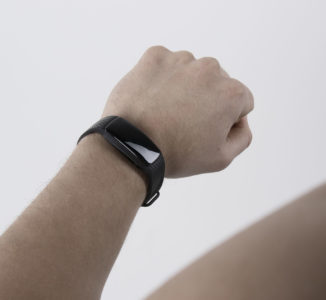
wearable painChronic pain affects roughly 100 million Americans, and the pain management market is estimated to be about $635 billion a year. With so many people to treat and money to be made by finding new, safer treatment options, a number of different technology companies are jumping into the world of pain management.

One area that is of particular interest to these companies is wearables and how they can be used to combat and treat chronic pain. A recent study involving more than 1,600 people with distal and proximal chronic pain focused on the Quell wearable device. The wearable allowed patients to track their pain in real time, including changes in pain intensity and pain interference with sleep, activity and mood on an 11-point scale. Patients tracked these changes over the course of two months, and researchers analyzed the findings at the conclusion of the study.

But tracking wasn’t the only feature available with the wearable. The unit actually provided high-frequency transcutaneous electric nerve stimulation. Many patients found that when they wore the device and it was emitting signals, that their pain levels decreased.

“[We found] statistically and clinically significant decreases in pain interference with activity and mood” and “a clinically significant decrease in pain intensity and less pain interference with sleep,” researchers wrote.

Wearables and the Future of Chronic Pain Management

The quell device was only helpful for a select number of people dealing with certain types of chronic pain, but the technology behind the device is exciting. It’s like a hybrid Fitbit and TENS unit, and as the technology continues to progress, we may soon see wearables that can work to drown out pain signals in all different areas of the body.

We understand the science, but because pain is such an individualized issue, there’s no one-size-fits-all wearable for chronic pain. Opioids do a better job of controlling a wider type of pain, but they come with their own potential drawbacks, including potential addiction and dependence. Wearables do not present the problem of dependence, but the tricky part is getting them to impact the specific nerve pathway that is causing pain.

We need to keep investing money in these alternative treatment options and in pain management as a whole. It seems like we’re nearing a breakthrough, not just with wearables, but as a whole. Pain is a huge industry affecting tens of millions of people, so it’s going to draw attention and investments. The first company to develop a wearable or another opioid alternative that can reliably control certain types of widespread pain will set the bar and enjoy the spoils that come with it. This will lead to more investments, better technology, and hopefully, better non-opioid patient care options for chronic pain. We’re excited to see what the future holds.

Obesity, Doctors and Diets

rethink obesityEveryone knows how hard it is to be obese and lose weight. I recently was sent through one of my many websites that I watch an article first published by Huffpost on obesity.  It was a long article on how society views and treats obesity. I am not sure about the goal of the overall message, but it did bring up some interesting ideas.
For the person who is obese or wants more insight into a different perspective on obesity, this is a good article. As a physician, I am always trying to learn something new, and medical resources are not always the most interesting. Finding a layperson’s view on the subject is often enlightening, and that’s what I found in this article.

Obesity is a major factor in society. It can affect physical and emotional health. The above article talks mostly about the psychological and emotional impacts of obesity. It barely touches on why there are so many people who are obese and struggle with weight loss. There are a few messages about our diets and how many of us view food buried in the article. The majority of the article is about our attitudes about obesity. The message overall is maybe many of us need to rethink our understanding of the struggles of obesity.

Rethinking Obesity

If you’re overweight or obese, the prospect of losing weight is likely on your mind, but it an be intimidating to even take those first few steps towards a healthy lifestyle. Aside from societal pressures, most people lead busy, active lives that don’t always allow us to put our health first. Long hours at the office, driving the kids to and from practices and running errands throughout the week doesn’t always leave us time to get our exercise or cook healthy meals. There are a number of factors working against our ability to lose weight.

That can make the prospect of losing weight seem daunting, so much so that we’re afraid to take the first step. But we need to understand that losing weight isn’t about ALWAYS making the right dietary and exercise choices, it’s about making more right choices than we did in the past. We need to come to grips with the fact that we’re not going to lose 20 pounds in a week. But if we can make small changes – changes that aren’t life altering and are thus, sustainable long term – we can lose half a pound or a pound a week. This will eventually become a new normal, and although your weight loss journey may take longer than initially expected, you’re more likely to end up with sustained results.

Too many people dive headfirst into a diet routine that is simply unsustainable. They start by dramatically cutting calories and exercising hours each day, and while that may lead to five or more pounds of weigh loss in the first week, it’s highly unlikely that you’ll be able to sustain that. Slowly you’re going to start eating worse and working out less, and eventually you’re going to be back to square one because you’re gradually making poorer health choices instead of making smaller, more sustainable choices.

For example, small steps can simply be something like avoiding snacking after 7 p.m., or subbing out your afternoon soda with water. Make small, sustainable changes right away, even if it doesn’t immediately lead to you having a calorie deficit for the day. It’s much more likely that you can stick with these changes and keep moving the needle in the right direction instead of believing you can exercise for two hours daily and cut your calorie intake in half.

We need to rethink obesity and how we tackle the issue if we want to be successful in our weight loss journey.

5 Healthy Habits To Live Longer

healthy habitsEveryone has advice on living better and longer. Sometimes the advice is complex, sometimes someone is just trying to sell you something, and in a recent StarTribune issue, there was some simple practical advice. The information is from a study of 100,000 people published originally by the American Heart Association. It lists five habits to adopt to live better and longer. It is the straightforward approach to life.

The Five Habits

The first habit for good health is to avoid smoking. The best habit is to never smoke. The dangers of smoking have been known since the early 1960’s. Everything from vascular disease, to lung problems and cancer result from smoking. Quitting smoking does help, never starting is even better as far as the risk is concerned.

The next habit is maintaining a healthy weight. The easiest tool is based on having a body mass index (BMI) that is between 18.5 to 24.9.  The formula for is:  BMI=703x[(weight in lbs)/(height in inches)(height in inches)]. The number can be looked up in charts. Unfortunately this is a rough guide, and if you are muscular, or have a larger build with “big bone” structure, you may fall into the category of obese. For instance my BMI is 24.3, it is borderline since I have relatively more muscle than fat but I am pretty healthy from a cardiovascular standpoint due to an active lifestyle.

The third habit to increase life is to exercise moderately for 30 minutes a day. This is to walk, swim or work out in any sort of way every day if at all possible. The 30 minutes does not have to be all at once. If you take three ten-minute walks a day, that adds up to the correct amount of time. In addition to the above aerobic conditioning, most health advocates recommend a general strengthening program three times a week to maintain muscle tone. A daily stretching program to reduce muscle tightness and pain is also helpful.

The fourth habit is to drink only a moderate amount of alcoholic beverages. That is on average only 1 to 2 drinks a day. Drinking wine is often better than mixed drinks or beer due to some of the compounds from grapes that have positive health benefits. All alcohol contains carbohydrate-type calories and this needs to be remembered as part of your overall food intake. Excessive intake of alcohol, binge drinking and then averaging out the intake over time does not count. Binge drinking is dangerous.

The last healthy habit is to try to maintain a healthy diet. A healthy diet includes higher intakes of vegetables, fruits, nuts, whole grains, fibers, and stick to fats that are polyunsaturated or long-chain fatty acids. The best meats are fish and poultry as well as white meat (low fat pork). Obtaining protein from vegetable sources like beans and legumes once a week is also highly recommended. Try to reduce the intake of red meat, sugar and fructose sweetened beverages, trans fats, and high sodium salty food. Part of eating healthy is also controlling portion size and avoiding excessive snacking.

Better living is a goal in life. To reach the destination, one must take steps to change if you are not where you want to be. Setting realistic goals and changing one aspect of your life at a time is the best. Furthermore, be accountable to yourself and one another, as that will help you reach your goal. If you need help, work with appropriate experts to reach your goals. Help may be from dieticians, physicians, physical therapists, trainers to even psychologists. Change is difficult, and better health is a life long goal.