
5 Scary Side Effects Of Chronic Pain That We Don’t Talk About

pain scary halloweenChronic pain, like Halloween, can be scary, and one driving factor behind our fear of our chronic pain condition is that certain aspects of our care are not easy to talk about. However, we’re here to shine a light on these issues and bring them to the forefront so that they are easier to talk about and less stigmatized. In today’s blog, we take a closer look at five scary side effects of chronic pain that we don’t always talk about.

Scary Side Effects Of Chronic Pain

Chronic pain can be scary for a number of reasons outside of the physical pain. Here’s a look at some of the scary side effects of chronic pain that we don’t always talk about.

1. Isolating – Chronic pain can be extremely isolating. It can make you not want to get out of bed and negatively affect your social life. You may not want to go out with friends or family because you’re scared of a flare up. You may also feel like the only person who knows what you’re going through, and if other people can’t relate to your pain, you can feel all alone. However, you don’t have to feel alone. Really open up with your friends about why your chronic pain is limiting, and strive to reach out on good days. Also, know that there are support groups and pain management specialists who want to help treat your pain any way we can so you have fewer bad days.

2. Self-Defeating – Chronic pain can make it so you don’t want to get out of bed, and this inactivity can worsen a chronic pain condition. A chronic pain condition can be self-defeating, but only if you allow it to be. It won’t always be easy, but fight through your discomfort and find ways to win some small battles on even the worst of days. Get up, get moving and do your therapy exercises. It will make it easier to get out of bed the next day.

3. Pain Is So Individualized – Pain is so unique to the individual, and so it can be tough to really find someone who knows exactly what you’re going through. That’s why it can be so difficult to find relief through online forums and your inner circle. Nobody can really relate to your specific pain. That said, a pain management specialist has likely seen very similar cases and has experience helping those patients overcome their pain. Pain is very individualized, but a professional can help find individualized solutions to your pain.

4. It Will Never Go Away – Many patients feel like their chronic pain condition will never go away, but the good news is that’s not typically true. While we may not be able to fully resolve your pain, the vast majority of patients can see a significant reduction in symptoms by working with a specialist and really committing to an active treatment plan. Pain is only defeating if you allow it to be, so focus on your progress and know that it’s possible to feel better in the near future.

5. The Psychological Effects – Finally, chronic pain can have a significant effect on a person’s mental health. A restricting condition can leave a person feeling as if they are less of a parent or a spouse because of the way their condition affects them. This is entirely untrue, but that doesn’t mean that it always feels untrue. It’s imperative to treat the physical and the psychological effects of chronic pain, because physical pain can take a huge toll on our mental well-being.

To talk with someone about any of these five aspects, or to get in contact with a specialist who will put your health first, reach out to Dr. Cohn’s office today.
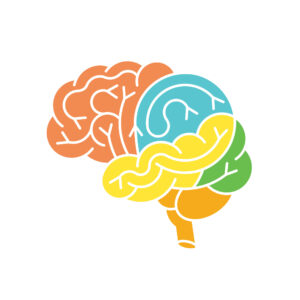
Targeting The Brain With Therapy, Not Pills, Could Help Eliminate Chronic Pain

prt brain therapyChronic pain conditions tend to be extremely complex, which is why successful treatments are often so difficult to find. Some providers know that certain medications can help to drown out some symptoms, but opioids don’t really treat the underlying issue. According to new research out of Colorado, targeting the brain with psychological therapy could be much more successful at treating the root cause of a number of chronic pain conditions.

The Psychological Side Of Pain

Chronic pain is typically caused by how the brain interprets neurons and other signals from the body, so it stands to reason that our focus should be on working to change how our brain understands the signals it’s being sent. That’s obviously easier said than done, but according to researchers at the Intermountain Neuroimaging Consortium on the CU Bolder campus, it can be done.

For the study, lead author Yoni Ashar, who conducted the study while earning his PhD in the Department of Psychology and Neuroscience at CU Boulder, and team recruited 151 men and women who had back pain for at least six months at an intensity level of at least four on a scale of zero to 10. Participants were divided into three groups, with the treatment group receiving eight one-hour sessions of Pain Reprocessing Therapy (PRT), a technique developed by Los Angeles-based pain psychologist Alan Gordon.

The goal of PRT is to educate the patient about the role their brain has in generating chronic pain, to help them reappraise their pain as they engage in movements that they’ve been afraid to perform, and to help address emotions that can exacerbate their pain. For example, if a person always has pain when they sit down, they’ll be asked to perform the action slowly, pay attention to how it really feels and to acknowledge the action of sitting as being a safe on. They are also asked to pay attention to when pain develops in other parts of their day, because it could be stress or activity induced.

Finding A Solution To Pain

Study senior author Tor Wager said that while pain may be caused by your brain, it doesn’t mean that it’s something the brain is making up.

“This isn’t suggesting that your pain is not real or that it’s ‘all in your head’,” stressed Wager, a former professor in CU Boulder’s Institute of Cognitive Science, now at Dartmouth College. “What it means is that if the causes are in the brain, the solutions may be there, too.”

According to researchers, 66 percent of patients in the treatment group were pain-free or nearly pain free at the end of treatment, compared to 20 percent of the treatment group and 10 percent of the no-treatment group. However, they also noted that this type of treatment should only be considered for pain that’s being caused by a brain misinterpretation, not pain that is rooted in an acute injury or disease with a clear pain pathway.

We’ll keep tabs on this technique, but the idea is there. If the cause is in the brain, a solution can be found there too. If you need help overcoming your chronic pain condition, reach out to Dr. Cohn and his team today.

Tips For Treating Post-Traumatic Pain

post-traumatic painPost-traumatic pain is any type of pain that persists longer than it should or pain that is greater than expected given the nature of the injury. For example, if you sprain your ankle and you’re still dealing with pain and discomfort weeks later, you may be dealing with post-traumatic pain. Similarly, if you’ve gone through 2-3 months of rehabilitation after spine surgery and you’re still battling lingering pain, it could be a case of post-traumatic pain. Below, we explain why post-traumatic pain exists and how a pain management specialist can help you treat it.

Why Does Post-Traumatic Pain Develop?

Post-traumatic pain can develop for a few different reasons. Obviously there will be pain associated with your original injury, but if it persists after your body has returned to normal function, there could be more going on behind the scenes. Oftentimes post-traumatic pain is caused by damaged or misfiring sensory nerves or a disproportionate inflammatory reaction by the body’s immune system.

Nerve damage or a disproportionate inflammatory response can occur after any type of traumatic experience, but they tend to be most common after trauma associated with:

  • Car accidents
  • Athletic injuries
  • Falls from a height

Pain tends to develop in and around the area of the initial injury, but it doesn’t always follow this pattern. Depending on which nerve is damaged, pain sensations could be expressed in other areas of you body, like your arms or legs. As you might imagine, this can make it difficult to pinpoint the cause of the problem, much less treat it.

Treating Post-Traumatic Pain

Because pain is so unique to the individual, there is no one-size-fits-all plan for successfully treating post-traumatic pain. With that in mind, there are some steps that you can take that can help reduce your likelihood of developing post-traumatic pain or eliminating it once it sets in. Those steps include:

Do Some Active Conservative Treatments On The Initial Injury – Don’t just let time run its course and hope that your initial injury will heal. Participate in physical therapy, do some gentle exercises and regularly stretch the area to retain flexibility and function in the area. This will help your body recover from the initial injury and strengthen structures that support and stabilize the area.

Pair Active Options With Rest And Anti-Inflammatory Medications – Rest and anti-inflammatory medications can help to calm inflammation that could be contributing to post-traumatic pain, but these passive options should not be your only form of treatment. You need to pair them with the active treatments above to preserve healthy tissue and joint function, which can help stave off post-op pain.

Connect With A Pain Management Specialist – Finally, sync up with a pain management specialist in your area like Dr. Cohn. He’ll be able to look at your initial injury and any lingering effects and determine exactly what’s going on in your body. From there, he’ll be able to develop a treatment plan that targets the specific nerve or regions that are contributing to your post-traumatic pain. Let a professional assist you on your pain recovery process if you’re finding it difficult to overcome discomfort.

If you need help managing or treating your post-traumatic pain, reach out to Dr. Cohn’s office for assistance. Give his team at call today at (952) 738-4580.

Chronic Pain Patient Sets Impressive World Record

plankAn Australian man proved that you can overcome chronic pain and become a world record holder if you set your mind to it.

28-year-old Daniel Scali recently set the Guinness World Record for the longest abdominal plank, holding the position for a whopping nine hours, thirty minutes and one second. That’s an incredible feat on its own, but the record is made even more impressive when you consider that Scali has been dealing with chronic pain for more than half of his life.

According to Scali, he battles complex regional pain syndrome on a regular basis. He said that he broke his arm in a trampoline accident when he was 12, and ever since he’s been dealing with pain in his arm. He said that while the pain has persisted, how he views his pain has changed.

“The pain is still there. The pains aren’t changing, but my attitude towards the pain changes,” Scali told CNN. “If you had decided to tell me five years ago that I would have … gone for a record of attempting to go for a plank, there’s no way I would have believed it.”

Winning Out Over Chronic Pain

Interestingly, this was Scali’s second attempt to etch his name into the history books. Previously, he planked for nine hours and nine minutes, which would have broken the previous record of eight hours, 15 minutes and 15 seconds, but Guiness officials took issue with his hip position during that attempt. Scali shook off the disappointment and set the record on his next official attempt.

And if you think you can’t relate to this workout warrior’s story, think again. Scali attempted his first plank less than a year ago, and he fared just like many others trying the exercise technique for the first time.

“My first plank was in November 2020 and that was for two minutes,” he said. “And the two minutes felt like an absolute lifetime.”

A couple months later, Scali began to look into how to apply for the Guinness World Record and got help from a coach who helped to improve his technique and look past the chronic pain in his left arm. Scali wore a compression band to help ease the pain, but he said there were times during his planking when he wouldn’t be able to move his arm. He said thinking about others in a similar battle helped him push through the discomfort and ultimately achieve his goal.

“But I would know someone else is out there watching me, you know. I would know that someone else is fighting a more severe disease than what I’ve got. There’s always someone out there worse than yourself,” said Scali “I wanted to show people that no matter what pain you deal with, no matter what issues you have, if you want to do it and you believe you can do it, then go for it.”

Awesome words to live by from an inspiring person who won’t let chronic pain hold them back from achieving their dreams!

New Study Suggests Medical Marijuana Ineffective For Most Chronic Pain Patients

medical marijuanaA new study published in the British Medical Journal concluded that while some chronic pain patients find helpful relief through medical marijuana, the treatment is unlikely to benefit most patients.

To get a better understanding of the effectiveness of medical marijuana for chronic pain sufferers, an international group of researchers analyzed three dozen medical cannabis studies. Overall, they found that only a small percentage of participants reported “an important improvement” in chronic pain, physical function or sleep quality when taking oral or topical cannabis treatment.

“When we look at the overall evidence for therapeutic cannabis products, the benefits are quite modest,” said lead author Jason Busse, associate director of McMaster University’s Michael G. DeGroote Centre for Medicinal Cannabis Research in Ontario. “So medical cannabis is not likely to be a panacea. It is not likely to work for the majority of individuals who live with chronic pain. We do have evidence that it does appear to provide important benefits for a minority of individuals.”

Chronic Pain and Medical Marijuana

We have talked up the potential benefits of medical marijuana for chronic pain on this blog in the past, but at the same time, we’re not entirely surprised by the findings for a number of reasons. Here’s why:

Chronic Pain Is Complex And Individualized – Chronic pain is not like a broken arm. A chronic pain condition is highly individualized to the patient, and what works for one patient may not work for others. When it comes to chronic pain, there is no one-size-fits-all answer to chronic pain. Expecting medical marijuana to treat all different forms of chronic pain would be foolish.

Medical Marijuana Is Complex – Even though medical marijuana is highly regulated, there are so many different cannabis strains, and they can each affect a user differently. It’s not like taking 400 milligrams of Ibuprofen. Chronic pain treatment effectiveness may simply be lacking because of the differences between cannabis forms and strains.

Early Stages Of Understanding – We’re still in the early stages of learning about the effectiveness of medical marijuana for chronic pain. Moreover, federal regulations oftentimes make it difficult to research medical cannabis. We’re trying to learn more and increase its effectiveness, but we’re in the early stages, and access to data isn’t always easy to come by.

Certain Side Effects – Even if medical marijuana did help with a patient’s pain, the treatment can also come with some side effects that can leave people questioning whether it is the right treatment for them. Minor or mild pain improvements may not be worth it if they find that they are dizzy, anxious or have the sensation of being “high,” which have been reported in some users. Again, more research could help limit these unwanted side effects in some patients, but the research is lacking for a number of reasons.

There are also plenty of benefits associated with medical cannabis. Aside from it’s potential to unlock chronic pain, it’s also much less likely to become addictive or physically harmful like opioids – another common chronic pain condition treatment. Simply put, we’re not ready to give up on this potential solution to chronic pain, and we hope that this study only makes it clearer that more funding and research on the potential benefits and best practices for administering medical cannabis for chronic pain is needed.