New data shows that the number of prescriptions for opioid painkillers filled in the United States last year fell drastically, representing the biggest drop in 25 years.
The decline comes amid prescription restrictions and public education campaigns to help spread awareness of how opioids, when used incorrectly, can have harmful side effects. The report on the findings, which was released Thursday, shows a nine percent average drop nationwide in the number of prescriptions for opioids filled by retail and mail-order pharmacies.
Each state and Washington D.C. had at least a five percent decrease in opioid prescriptions. Declines were higher than 10 percent in 18 states, including all of New England, West Virginia and Pennsylvania.
“We’re at a really critical moment in the country when everybody’s paying attention to this issue,” said Michael Kleinrock, research director at IQVIA Institute for Human Data Science, which released the report. “People really don’t want them if they can avoid them.”
Drop In Opioid Prescriptions
Opioid prescriptions have been rising steadily since the mid-1990’s, with use peaking in 2011. The US far outpaced levels of other wealthy countries where national health systems are more strict about narcotic control. Overdoses and deaths from prescription opioids have been soaring in recent years, but advocacy groups, physicians and patients have been fighting back with increased educational strategies.
With all this said, opioids still do play an essential role in pain management for patients with chronic conditions. We are not against opioids when they are part of an integrated pain management plan, the problem becomes when doctors don’t take the time to educate their patients about their risks or conduct follow up checks to ensure patients aren’t in over their heads with their medication.
The downturn in opioid prescriptions is both good and bad. It’s a good sign that pill-mill doctors are getting exposed for what they are, but there’s also a decent chance that some chronic pain patients are struggling to get access to the medications they dearly need. It’s a double-edged sword, and there’s no perfect solution, but we should continue to push patient education so every person who takes a painkiller for their issue knows exactly what to expect and how to avoid a potentially serious issue.
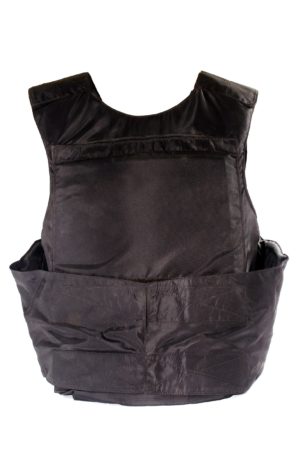
Recently I found an article in Science News on an old material with a new use. The material is polymer that is similar to a fiber used in making bulletproof vests. Apparently, with some modifications, it has been made into a very tough material with similar toughness, stiffness, and water content as cartilage in the body. Cartilage is the material that covers bones and makes up joints in the body. The degenerative type of arthritis one gets as they age, osteoarthritis, involves the deterioration of cartilage. This is also the same wear that people have in their joints that leads to the need for joint replacement.
Artificial Disc Cartilage
Developing an artificial material that would replace the cartilage-on-bone in joints with the same or better properties of current joints is desirable. Instead of preforming total joint replacements, the worn cartilage could just be replaced. This would probably be much simpler and less risky. The artificial cartilage most likely could be used on any joint versus trying to make replacement type specific joints for each joint in the body. It most likely would just be a coating placed on the current cartilage as a replacement without the need to remove the old bone and joint structure. The main problem now is that we do not know yet how to make the material adhere to the bone.
The new material is what is called a hydrogel that is mostly water and contains microscopic aramid fibers. These fibers are what strengthen bulletproof vests. The material is made of either 70 percent or 92 percent water. It was able to maintain its shape when squeezed or stretched. Best yet it exceeded the toughness and stiffness of real cartilage that is found in our bodies.
The new material is exciting since it has the properties to replace cartilage which is the main problem we have as we age since it deteriorates. Damaged cartilage is what leads to the joint pain that many people suffer. The unique material may also be able to be used in other structures like tendons, ligaments and possibly even discs in the spine. If we can figure out if the material can be integrated into the body without difficulty and can be attached solidly to bone, it has real potential.
Currently we do not know how well it will do in the body. The next phase of research is whether it will be safe and effective for use in animal or human bodies. Whether we have found the solution to age related degeneration or not, it is still too early to know. If the research does pan out it will be a wonderful solution to improve aging.
Eating right has always been a challenge, and losing weight sometimes seems to be impossible. With everything in life, change is hard and finding the right path is never easy. There are more diets available and more advice than one can ever fathom. Being the right weight is not magic, but it is work and a lifestyle commitment.
If you want to be successful, one must commit to change. So many times people say they are unhappy with where they are currently but in the next breath they are comfortable with how everything is and are not willing to consider alternatives. Furthermore, most people who ask for advice do not trust anyone who might have legitimate information. If the advice is sensible and simple it seems even less trustworthy.
Steps To Take
So the first step in changing one’s weight is to understand whether you feel it is problem and whether what you are eating is affecting your life. If you are totally happy with how you feel and with your health, than you have no reason to change. Life is likely to stay the same for you.
A person’s weight is dependent on a complex array of variables from genetics, to exercise to what we eat. There are things we can change and things that maybe outside of our control like our genetics and medical conditions. However, we can control what we eat, how we perceive our food and we can also control our activity level. So weight management is about our interactions with food.
The temptation is always for people to look for a quick fix. In pain management everyone just wants a pill or quick solution. Once people realize the answer may be complex, the light goes on. If the answer was simple, the problem would likely not exist. Education is one of the best paths toward the solution.
Weight gain was a slow problem that crept up on me. Every year my baseline weight increased. Initially it was ok. When my pants were no longer fitting in the waist and I needed a new wardrobe, it became something I needed to understand. The first issue was as we all grow older, our bodies change. For me I had reached a time when there was a hormone change in my body and that caused a slowing of my metabolism. The old school teaching was calories in and calories out must be balanced. So I just tried to exercise more. Initially that may have worked, but only for a short period of time. However, exercising for hours a day does not work to burn off all the calories taken in by eating more than needed. Running or walking a mile only will burn off 100 calories. The not so obvious answer then was I needed to change my diet, and I probably need to do more than I have already done.
New Dieting Goals
The new goals with dieting are to be sensible about eating. The important things to remember are the quality and quantity of food. There are a million diets with tons of rules. Most of the diets are complicated, require special foods, and are difficult to follow for a long period of time. In reality, simpler is better.
First, remember a portion size is a ½ cup for most foods. Measure out that amount and it is not very much food. A small size French fries at MacDonald’s is likely 2 portions. A ½ cup of pasta is the size of a single scoop of ice cream. If one sticks with appropriate single sizes of portions one will not be over eating – staying to the right quantity. Next buy your own fresh food and cook it to make your meals. Eat fresh vegetables, fruits, lean meats, fish, and try some vegetarian meals since the calories will be less and healthier. Keeping the refined sugar down, as well as limiting bread and pasta helps most tremendously.
Typical meals tend to change as one begins to improve your diet. Most dietitians recommend that everyone should eat breakfast. This prevents the body from thinking it is starving and turning all intake into fat for storage. Breakfast can be a piece of fruit, Greek yogurt for diary and protein, and oatmeal or granola cereal (for more protein, fiber, and a bit of carbohydrates). Lunch is a green salad with a low fat dressing, and 4 ounces of protein. Dinner is a portion of vegetables, 5-6 ounces of lean meat, and fruit or a salad. It is okay to have a small portion of brown rice, pasta or potato, but not with butter or a fatty sauce. If you have no recipes, get yourself a cook book. Lastly, donate or throw out all of the snacks and junk food that is sitting around your home and tempting you to eat. Also, stop buying lots of processed food, and when you eat out, eat the same types of meals that you would cook on your own.
Finishing Strong
If you are serious about making a lifestyle change, then you may be successful. Some people are very self-motivated and can change if they set their minds to do something. For most of us, working with a partner and holding each other accountable often is easier and more successful. Another couple of helpful keys are to record everything you eat daily and keep a record of how much you actually eat. You must weigh out your portions and be accurate with them, and it also helps to weigh yourself once a week. Tracking your activity with a fitness tracker will also help monitor about how much you are burning, but they are notoriously overly ambitious in how many calories they are estimating that you are burning.
Starting a diet does not need to be complex. It requires one to shop from the outside edges of the grocery store. Eat fresh fruit, vegetables and lean protein sources in controlled portion sizes. Reduce the amount of simple carbohydrates – sugars, pastas, and breads. Track your portion size, your intake, and weight. Increase your activity level and move moderately for at least 30 minutes a day. Drink more water also, as this may decrease your appetite. Lastly commit to change and keep at it.1-2 lbs of weight loss a week is excellent progress.
Exercise isn’t just a way to stay in shape or calm inflammation, it also has enormous benefits for our overall health. In fact, new research shows that it doesn’t really matter whether your walk or run, so long as you are getting regular exercise.
According to new research, if you want to improve your overall health and reduce your risk of all-cause mortality, make sure you get some type of exercise on a regular basis. It doesn’t really matter whether it’s bi-weekly kickboxing classes or a 30-minute walk around the neighborhood with your dog, so long as you’re moving and working muscle groups.
The findings come on the heels of a study of more than 4,800 adults by the Journal of the American Heart Association. For their study, researchers sorted activity into two different categories – total minutes of activity per day and total minutes of intense or concentrated activity.
The Benefits Of Activity
You may assume that individuals who participated in more concentrated exercise would fare better than individuals who just walked or moved around, but that wasn’t really the case. The study found that neither type of activity had a significant edge over the other. According to researchers, individuals who clocked roughly 30 minutes of moderate to vigorous exercise a day were significantly less likely to die from any cause than people who got none. Participants who exercised an hour or more each day fared even better.
“The key message based on the results presented is that total physical activity (i.e., of any bout duration) provides important health benefits,” the study authors wrote.
Cardio workouts not only help with your overall health, but they can provide some other benefits as well, like increased blood flow, enhanced memory and improved mood. The overall message from the study is that the more you move, the healthier you are likely to be.
Chronic pain comes in so many unique forms, and everyone experiences pain differently. Consequently, there is no one-size-fits-all solution to chronic pain. So as the title of this blog implies, how are we going to provide you with the only advice you need for treating chronic pain? Read on to find out.
Managing Chronic Pain
When it comes to managing carpal tunnel, lumbar spine pain or chronic migraines, there’s really only one piece of advice you should abide by when caring for your condition, and that’s this – Find what works for you, and stick to it.
As a medical professional, I always want to do my reading and examine the science behind pain management techniques. That’s why I’m hesitant to unconditionally provide support for things like medical marijuana and Kratom. There’s simply so much that we don’t know about individualizes strains and how they react to each person individually for most doctors to 100 percent support their use to treat pain.
That being said, we can 100 percent support a person who has found a relief through these methods. At the end of the day, our goal as pain specialists is to help you manage, reduce and ultimately eliminate your pain. If one of these solutions works for you, we’re going to be your biggest supporter, but that doesn’t mean we’ll blindly prescribe the same treatment for someone else dealing with a different pain problem. What works for one may cause a rash of problems in someone else. If there was a magic pill to treat pain, our job would be easy, but there’s not, so pain care requires a highly individualized approach.
Finding What Works
As I’ve mentioned on the blog before, I have struggled with my own pain problems throughout my life. I deal with regular occurrences of back pain, and it took me a while to find out what works to reduce flare ups and keep pain from controlling my life. It’s rarely easy, but that’s the challenge of pain care. I have to make time to get regular exercise, to eat healthy foods and to stretch before a partake in activity. It would be easier to stay on the couch or sleep in a little longer, but I know that doing so means a day with more pain. By finding what works and sticking to the plan, I’ve been able to take control of my back pain.
You can do the same. Whether that involves exercising in the evening, avoiding caffeinated beverages, a daily Kratom pill or acupuncture, when you find something that works, stick with it, but also build on it. If morning exercise helps, see how you body responds to morning exercise and another therapy technique. Keep trying new things until you’ve optimized a treatment plan that greatly reduces or eliminates your pain. Remember that it’s not going to be easy, but if you’re truly committed to finding a solution, you’ll make these treatments a priority.
If you need help developing a care plan or figuring out new treatment techniques to try, don’t hesitate to reach out to our clinic. Because at the end of the day, we want to find a solution that works for you.
 New data shows that the number of prescriptions for opioid painkillers filled in the United States last year fell drastically, representing the biggest drop in 25 years.
 Recently I found an article in Science News
  Eating right has always been a challenge, and losing weight sometimes seems to be impossible. With everything in life, change is hard and finding the right path is never easy. There are more diets available and more advice than one can ever fathom. Being the right weight is not magic, but it is work and a lifestyle commitment.
 Exercise isn’t just a way to stay in shape or calm inflammation, it also has enormous benefits for our overall health. In fact, new research shows that it doesn’t really matter whether your walk or run, so long as you are getting regular exercise.
 Chronic pain comes in so many unique forms, and everyone experiences pain differently. Consequently, there is no one-size-fits-all solution to chronic pain. So as the title of this blog implies, how are we going to provide you with the only advice you need for treating chronic pain? Read on to find out.