Pain Management – Out With The New, In With The Old?

chronic pain programComprehensive chronic pain programs (CPP) have a long history, and they used to be the mainstay of treating pain. Up until the mid 1990’s, they were present across the country and there were several hundred present in the United States. With the widespread adoption of the use of opioids and the ratcheting down of medical expenses by insurance companies, many of these programs were eventually forced out of existence.

These programs cost between $5,000 and $20,000 and sometimes involved 2-4 weeks or more of inpatient care. In retrospect, considering the cost of surgeries and medications, these programs were probably a cheap investment for high quality proven outcomes. Today there are very few of these programs left – less than 100 nationwide – and we are suffering from a crisis of pain management and opioid addiction. In Minnesota, there only several left in the state.

Comprehensive Chronic Pain Programs

The typical chronic pain program is a behavioral based approach to pain with an emphasis on weaning off of all opioids. Nonaddictive medications are fine, and surgical or interventional approaches to pain are usually not a part of the program. Most of the emphasis is on changing behavior as it relates to pain. There is guided physical therapy, often aquatics, dietary advice and significant amounts of group and some individual psychological intervention toward the effects of pain on mood and activity level. The goal is to increase activity and function and show a person that their pain levels are often minimally impacted.

These programs are most successful for those whom have withdrawn from life and interactions. A typical patient in one of these programs is depressed, isolated, sedentary and not working. They often are very focused on taking medications and feel their pain prevents them from doing anything. However, to be successful in such a program, they must want to change their lifestyle.

Unfortunately, if you have chronic pain and are maintaining function in life, these programs often have little to offer. For a person who is well adjusted, with multiple outside of the home interests, working full-time, trying to exercise, doing meditation and not taking opioids, these programs have minimal things to offer that would be worthwhile. Pain management for many complex chronic pain patients is often much more difficult. Further, there are very few physicians in general who specialize in pain, and even fewer who have the interest, knowledge and experience to deal with many of these people.  

Finding a chronic pain program is often not too difficult, and asking your insurance company or physician will probably get you pointed in the right direction. Finding a good pain physician that will meet your needs can be extremely challenging. A good place to start is a Physical Medicine and Rehabilitation Physician that is board certified in pain. After that, look for recommendations and then visit with the doctor to see if they can meet your needs. Finding the right physician is often difficult, and unfortunately there are no easy answers when it comes to pain management.

The Daith Piercing Survey Is Complete!

daith survey completeIf you’ve been following this blog, you probably remember that we’ve been helping Dr. Chris Blatchley collect responses for a study he was conducting on the Daith piercing and vagal nerve stimulation. We’re happy to report that the first report of the findings has been published.

You can find the first report on the role of Daith piercings and vagal nerve stimulation by clicking here. That link will take you to the report, but updated versions of the report can be found on Dr. Blatchley’s main site, which you can get to by clicking here, so be sure to visit the site in the future to see the updated reports.

You Can Still Take The Study

Although the first version of the findings are in, you can still participate in the study if you haven’t taken the survey yet. Remember, this is an updated version of the survey, so even if you completed the survey in the past, you may still be eligible to complete the second version. To take the second version of the daith survey, click here.

Thank you to everyone who helped Dr. Blatchley with his research. He’s informed me that’s he has shared the findings with the British Medical Journal, and he hopes that they will publish the findings. If they are published, it would be the first of its kind research published in a medical journal! He’s also planning to release a full research article in the future based on the second version of the survey.

So please check out the findings, and keep your fingers crossed that they’ll make their way to the BMJ. The more migraines and vagal nerve stimulation are talked about in major medical journals, the more eyeballs we’ll have on the problem, and the more people we’ll have working towards a solution. Thanks to everyone who took part in the survey, and congrats to Dr. Blatchley for finishing the first version of the findings.

The Landscape of Addiction in 2017

addiction opioidsOne of my favorite activities is reading. I read a wide variety of things, some of the most interesting things come from magazines that are not medical. Time magazine regularly has interesting stories of health.  Science, a bi-weekly publication, routinely has articles on a wide range of subjects that challenge the core of what one thought was fact. National Geographic regularly throws in medical stories. A couple years ago they had a great summary on marijuana, and recently now they had a great article on addiction. Medical journals are often a somewhat dry and boring read, but they do allow one to keep up-to-date with current research. Sometimes these other magazines have extremely valuable information as well.

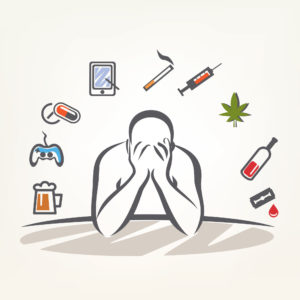
The September 2017 National Geographic lead story is on The Science of Addiction. The problem is more than just opioids, it is a vast variety of problems from smoking to gambling and including all kinds of drugs. Addiction is a very complex process in the brain, and is definitely a disease and not a moral failing. Different types of addictions may affect a variety of brain regions. The processes involve disruptions in pathways responsible for learning, emotion, desire, regulation, and cognition among many neural events. It can change chemical, hormonal, and electrical paths in the brain. Addiction becomes abnormal learning in the brain with the reward being the addictive activity.

Addiction And Our Brains

All addiction has its roots in the primitive regions of the brain. They have to do with our need to survive, and they all involve our senses like sight, smell and taste. Critical in addiction is the neurotransmitter dopamine and that stimulates brain motivation. Those lacking dopamine often are depressed. Further, Parkinson’s disease has a lack of dopamine, and when given to some patients, it causes problems with an addiction like gambling. When something is addictive, it stimulates the dopamine pathways in the brain and is a very positive reward. The dopamine reward is so strong in the brain, people lose the control of impulses and the ability to inhibit behavior even if it is self-destructive.  

Since there are many things that are now considered true addictions, it is likely there are many different strategies to treat them. For drugs, often there are medications that can block the pleasure from the drug and prevent withdrawals. For alcohol, there are drugs that make drinking nauseating. There are also numerous counseling strategies and psychological-type interventions to deal with the behavioral components of addiction. There are also some new novel strategies including electrical and magnetic stimulation of specific areas of the brain to treat addiction.

The problem of drug addiction or any type of addictive behavior is caused by abnormal function and rewards in the brain. Pain and the problems associated with the medications taken can cause addiction, but this isn’t always the case. Taking opioid medications does lead to dependence and tolerance of the drugs that cause them to lose effectiveness. Opioids can also change a person’s sensitivity to pain and make a person perceive pain sensations more intensively. Therefore, in general, opioid medications have many downsides.

Lastly, opioids can be addictive and cause typical addiction issues in pain patients, but it is in only in a small percentage, somewhere between 5-20%. In most chronic pain patients, addiction and problems with opioids are generally not a typical problem. Treatment in pain patients is the same as with any other person who has opioid problems, and is often best handled by a pain care specialist.  If you are a pain patient on opioids, and taking your medication has become the focus of your life, then it is probably time for one to be treated for addiction and be off of these medications.

Understanding Chronic Pain in Children

chronic pain childrenPreventing chronic pain is a daily battle for many adults, and the symptoms can be even tougher to control in children and teens. Interestingly, new research published in Health Psychology suggests that adolescent pain may be linked to previous experiences with pain, and if we can improve these initial experiences, children may be less likely to experience future pain.

It may sound complicated, but the research wanted to see if there was a link between a previous pain experience and how pain is felt and managed in the future. To do this, researchers examined children who had undergone a major surgery, as these experiences, even if they go as expected, may be traumatic to the child and are likely accompanied with some pain or discomfort.

“This is not to say that every child who has chronic pain had a surgery that led to it,” said study author Melanie Noel. “Rather, it’s that surgery is the only context where we can catch these kids before they develop chronic pain. We know that 15 to 20 per cent of children who undergo these major surgeries will develop chronic pain. So, if we can catch them early and begin to understand the factors leading to their chronic pain, maybe we can prevent it from happening in the first place.”

At the conclusion of the study, researchers found that a child’s memories of pain following major surgery actually influenced their recovery and was associated with an increased risk of the development of chronic pain down the road.

“We’ve discovered that the way children are remembering their pain is an underlying factor in the development of chronic pain,” Noel explained. “It’s not the pain they actually experience so much as the way they process those memories of the pain which is driving whether or not they’re improving, right around the time that pain can transition into chronic pain. At a certain point, these children should be feeling better but those who develop chronic pain are not.”

Managing Adolescent Chronic Pain

The study, which was conducted in Canada, suggests that anywhere from 15-40 percent of Canadian children experience chronic pain at some point during their childhood. Moreover, 60 percent of these children eventually develop chronic pain in adulthood, so it’s important to control chronic pain while kids are young to prevent it from becoming a problem when they’re older.

Researchers believe the findings can help point doctors and parents towards solutions. They believe that psychological and language-based interventions may be able to help kids better cope with post-surgical pain, which will help re-frame their memories of the pain and in turn decrease their likelihood of developing chronic pain in adulthood.

“We can teach kids how to reminisce and talk about their pain experiences in a way that emphasizes anything positive about it,” said Noel. “Maybe the child coped with something well, maybe there was a really friendly nurse. It’s getting them to talk about things that aren’t just focused on the awful after effects of the surgery. It’s a way of catching it, a talk-based intervention that can possibly re-frame the memories. This may actually alter the pain trajectory. It’s one thing we can do to make the recovery and future experiences of pain better.”

This is fascinating research, and I hope the findings are considered by pain professionals when helping children get to the bottom of their chronic pain.

September Is Pain Awareness Month

pain management awarenessIf you don’t deal with pain on a regular basis, odds are you don’t realize how big of a problem pain is in our society. That being said, there’s a good chance you do deal with pain, because roughly one in three adults is the United States is battling a pain condition. Whether it’s from arthritis of the hips, carpal tunnel in the wrist or another painful conditional, pain is very prevalent here in America.

To help bring awareness to the pain problem, September has officially been declared Pain Awareness Month. Today, we hope to share some facts about pain and bring attention to the problem so that we can work towards a solution.

Everyone’s Pain Is Different

Pain is unique to the individual. Even though you may share a diagnosis with thousands of other people, your pain is going to be unique to you, so it should come as no surprise that treatments can differ greatly even if two people are diagnosed with the same pain condition. For some, physical therapy, exercise and a diet change can help keep pain at bay, while others will find relief with acupuncture, yoga and anti-inflammatory medications.

The key to treating pain is to treat the underlying condition, not the symptoms. Some passive treatment techniques like opioids or pain injections help to decrease pain levels in the short term, but they do nothing to treat the underlying problem, which means these patients will never truly be rid of pain. Pain specialists are great at finding the underlying cause and developing treatment strategies to fix the true source of pain. It’s not always going to be easy, but trust us when we say it will be worth it in the long run.

Treating pain also needs to be a two-way street. There is no magic pill to cure your of your pain, so while a doctor can help diagnose your pain and suggest treatment options, we can’t force you to take part in therapy or eat a healthier diet. The desire to get rid of daily pain needs to come from the patient. We will do everything possible to help you on your journey, but we can’t do it for you. Meeting with a pain specialist is a great way to set and manage expectation between doctor and patient.

Facts About Pain

To better explain just how prevalent chronic and acute pain is in today’s society, check out some of the facts about pain below.

  • Over 75 million Americans deal with a pain condition, more than those diagnosed with cancer and diabetes combined.
  • 30 percent of adults between the ages of 45-64 experience pain that lasts longer than 24 hours.
  • The estimated annual cost of chronic pain in the US is more than $100 billion.
  • 1 in 5 people experience pain that disrupts their ability to sleep.
  • Back pain is the leading cause of disability for people under the age of 45.
  • Less than half of pain sufferers feel like they have control over their pain.
  • More than 75 percent of individuals with chronic pain say they suffer from depressive thoughts or anxiety.
  • Headaches were the most common type of pain that led to lost productivity in the workplace.
  • Only 15 percent of people with a pain condition go to a pain specialist. Most prefer their primary care doctor.

If you are dealing with a pain condition, consider setting up an appointment with a pain specialist. Your doctor has a wide range of medical knowledge, but they lack the depth of knowledge about specific pain conditions that a specialist has. If you want to set up an appointment, reach out to Dr. Cohn’s office today.