Pain is something that can quickly take over our lives. Pain can lead us to be more emotional and less empathetic with family and friends. It can hinder our ability to do things that make us feel better, such as exercise. It can take away our earning potential if we are unable to work because of the pain. In other words, pain can upend what you do and who you are.
And chronic pain like back or leg pain can be particularly overwhelming. It’s different than pain in an extremity like a finger or toe; leg or back pain starts in one spot and can radiate elsewhere and be unrelenting.
Many people start with traditional medicine such as pills or doctor visits, but those may have limited impact. They may also try natural healing, but again—the person may determine how effective those are. One treatment that works for many is spinal cord stimulation; this graphic explains what it is and how it might help.
What Is Spinal Cord Stimulation?
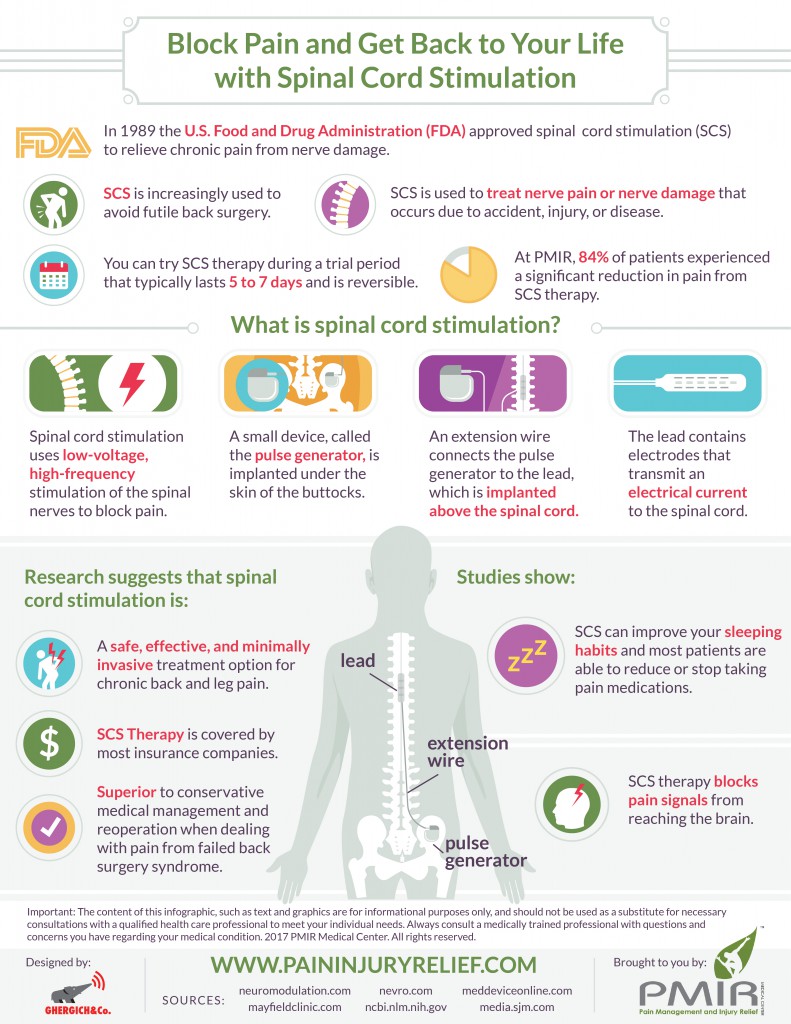
Spinal cord stimulation is a safe and relatively effective treatment option for certain individuals suffering from chronic back or leg pain. Roughly 80 percent of individuals who undergo SCS experience some form of relief, whether it be in the form of decreased pain, a reduction in the need for opioids or better sleep quality.
Our friends at PainInjuryRelief.com recently reached out to us with an infographic about spinal cord stimulation and asked if we’d be interested in sharing it with our readers. We are always happy to discuss new technologies and potential treatment options, so we’ve included it below. Check it out if you believe spinal cord stimulation may be something that you could benefit from.

 Recently, a new report published in the Journal of the American Medical Association suggests that there may be a link between chronic pain and the eventual onset of cognitive issues. But do these findings really suggest that chronic pain leads to an increased risk of cognitive decline, or is there something bigger going on? We take a closer look in today’s blog.
 Treatment of chronic pain is often complicated and requires multiple strategies to solve the problem.
  When it comes to controlling chronic pain, we all know how important it is to get a restful night’s sleep, but that’s easier said than done when you’re in regular pain. However, new research suggests that adding something to the mix may help control pain and provide you with a better night’s sleep.