How To Improve Your Sleep Quality

sleepEveryone wants to sleep better. Problems with sleep are now pervasive in today’s society, and there are many culprits. Medical sleep experts are taking a deeper dive into the dynamics of sleep and are now starting to have a more comprehensive approach to issues. In the past, sleep problems were overly simple and only a few problems were considered. Sleep apnea was the main concern, then restless legs became another area. At sometime it became a matter of taking the correct sleep medication; the right pill was the answer, but we’re learning more about better techniques.

Poor sleep leads to multiple problems. The simple one is fatigue with difficulty functioning at an appropriate level.  Compounding being tired is mood changes from anxiety to depression and even more severe psychiatric disorders.  Sleep deprivation also leads to a large number of health problems including weight gain, hypertension, heart disease and possibly late neurological problems like dementia.

The New Science in Sleep

The new science in sleep is now paying closer attention to whether the person is trying to follow their normal circadian rhythm.  Most people have normal sleep times and baseline cycles. Some people are morning people, while others like to stay up late and sleep in during the morning. These are natural cycles one is often born into, and trying to work against the natural tendencies often leads to additional sleep difficulties. Working within your natural cycle for sleep can diminish ongoing sleep problems.  If you are a night owl, trying to be awake at the crack of dawn is likely just to cause problems.

Recognizing your own natural tendencies towards sleep can reduce anxiety and improve the quality. I am not a night owl at all, therefore when I chose a specialty in medicine I knew I wanted to be able to sleep at night.  I knew I could not function well in the middle of the night so I needed a specialty where I could usually sleep at night. Throughout college I only pulled one all night routine. I almost always went to sleep before midnight and then awoke early to do whatever had to be done. My spouse is just the opposite and is up to all hours of the night routinely and hates mornings, and hates the cheerful me as I start exercising at the crack of dawn.

During the daytime our brains are processing new information and making new connections. At night the brain is doing its housekeeping, removing toxins and cementing into place the information acquired during the day. Nighttime also is the time the brain works on processing emotional connections. Time spent asleep is when the brain does all the background work to maintain health and is not interrupted by functions that are needed when alert and awake.

For healthy sleep and general ability to stay awake during the day, maintaining a regular circadian cycle is necessary.  There are multiple things that one can do to improve your sleep. The first thing is to consider using a 10,000-lux light box in the morning to mimic sunlight for 30 minutes.  This will help stimulate the brain to wake up and be less tired. At night, go to bed when you are tired. Do not lie around in bed waiting to fall asleep. Bedtime preparation is important.  Stop working 1-2 hours before bed and avoid thinking about provocative topics prior to sleep. As part of the wind down, do something calming like reading or listening to music. Avoid looking at screens and social media.  Lastly, avoid caffeine and stimulants late in the day as well as alcohol within two hours of sleep. Alcohol after the first hour of a sedative effect tends to make the brain alert after it is metabolized.

Having good sleep habits as well as working with your natural circadian rhythm improves the ability to successfully sleep and feel rested. It improves brain function and overall health in many ways. When sleep is a problem and the simple issues are addressed, then working with a medical sleep specialist is important to identify and address the causes of poor sleep.  

Prescribing Opioids in 2019

painkillersEvery day in my practice I sit down with patients who strongly believe that opioids are the best course of action for their pain condition. While opioids certainly can play a crucial role as part of a comprehensive treatment plan, they definitely are not a stand alone option and are far from a perfect treatment as their problems are numerous and well known.

Pain is the physical and emotional response to certain sensory signals. In chronic pain, these signals are not necessarily any indication of danger or potential damage that may occur to the body. Opioids tend to modify the signals of pain, but often are not the most effective treatment and can have devastating secondary consequences. Due to the problems opioids may cause, most physicians are reluctant to prescribe these medications. A new study from the University of Minnesota is shining light on the inconsistencies in when opioids are prescribed.

Opioids In Today’s Society

Before I get into the crux of this blog, it’s worth reiterating that every patient who is interested in opioids is not simply trying to abuse their medications. Some are misinformed, and some truly believe they can help even if they won’t solve the true problem. However, there is a small subset who want medications for reasons other than to treat the underlying pain problem. Thirty years of practice has shown me all the tricks patients play to get medications prescribed. At times it is surprising the act some patients put on to get pain medications. Most physicians are aware of the issues, but still the charades occur.

The new study from the University of Minnesota shows that physicians tend to be vulnerable to over prescribing when they are tired, running late with their schedule, or at the end of the day. These are times when saying yes is easier than explaining no and finding an alternative strategy. This is especially important in acute pain situations when patients are especially prone to abuse and other solutions are appropriate. In some acute situations, short-term prescriptions are okay for several days, especially related to trauma or surgery when other medications for pain are not advisable. Awareness and prescription protocols by primary care providers and emergency rooms about opioids has led to a significant decrease in prescribing these medications. Other providers have been somewhat slower to adopt new habits for safe prescribing.

Opioids are only a small tool in the overall arsenal to treat pain. For many situations, opioids work poorly and are not very helpful. For some patients, opioids have so many problems that  the risks of these medications are not even close to any benefit. The worst way to get these medications is to insist that they are the only thing that helps your pain. Usually that means that one does not want to work on other strategies that may be helpful. Unfortunately, some of the better treatments for pain are a struggle to implement because they take time, effort and money. Strategies like exercise, massage, relaxation and treating psychological issues are much more difficult then taking a pill. There’s no magic pill and it will take work, but you’ll be much better off for it.

Pain is difficult to manage, and pain specialists can help with a variety of options. Some problems are simple; most that end up with a pain specialist are very complex. There often is not a fix and most people will have to find a compromise and determine what they can manage and still function adequately.   If you want help with your pain condition, reach out to Dr. Cohn’s office today.

Five Non-Opioid Options For Chronic Pain Relief

chronic pain cpspChronic pain is one of the most complex health conditions to treat because it is so unique to the individual. What works for one person isn’t guaranteed to work for another, and sometimes many different treatment options are required in combination with one another in order to provide relief.
In our experience, painkillers and opioids can be effective for the right patient when used in combination with other treatment options, but they aren’t a good primary source of treatment. What we mean by that is we’ve never seen a patient get better solely by taking an opioid. They may be helpful in conjunction with dietary changes and other interventions, but they aren’t a great stand-alone option because they don’t address the root problem. Because of this, we want to share five chronic pain treatment options that can treat the root cause of pain and help you find relief. Below, we share five non-opioid treatment options that may be effective for your chronic pain condition.

Treating Chronic Pain Without Meds

This is a general guide of some treatment options we’ve found effective for some common types of chronic pain. For individualized care and a treatment plan tailored to your specific condition, please reach out to our office.

1. Exercise – Exercise is one of the most basic treatment options for some types of chronic pain. Exercise pushes healthy blood through your body, which can help structures function properly, and it works to strengthen supportive muscle groups. If back pain is causing discomfort, some low-stress exercises like swimming, walking or yoga may be just what you need to calm spinal nerve compression or strengthen key muscle groups that can contribute to pain.

2. Physical Therapy – A close cousin of exercise is physical therapy. PT is great for a number of different patients, but it’s especially helpful for those chronic pain patients who are battling arthritis or joint issues. Physical therapy helps you reestablish mobility and range of motion in the joint, and it can help prevent the further progression of arthritis, keeping you more mobile. Physical therapy works by targeting specific areas with certain exercises, stretches and movements.

3. Tens Unit – We’ve talked about TENS units on the blog in the past, but they can be just what the doctor ordered for the right patient. TENS stands for transcutaneous electrical nerve stimulation, and it is a small device that transmits electrical signals to drown out pain signals. Many of them are widely used among patients who suffer chronic headaches or migraines. You can learn more about different units and their uses in the above link.

4. Spinal Cord Stimulation – Spinal cord stimulation is another topic we’ve talked about in the past. They work similar to a TENS unit in that they provide electrical stimulation to drown out painful nerve signals, but these can be implanted inside the patient and controlled by a device to provide different types of stimulation as pain develops. New technology means these devices can even be recharged while still in the body. Again, you can learn more about this option in our expanded post in the above link.

5. Nerve Blocks – Finally, Dr. Cohn’s offers nerve blocks and corticosteroid injections for patients who are dealing with certain chronic pain conditions. For chronic muscles spasms or irritated spinal nerves, a calming injection can provide relief and allow patients the ability to pursue other active treatments, like PT or exercise. They aren’t always a very good stand-alone long-term solution, but they can be paired with other techniques to provide symptom relief.

Daith Piercings, The Vagus Nerve, and Migraines 

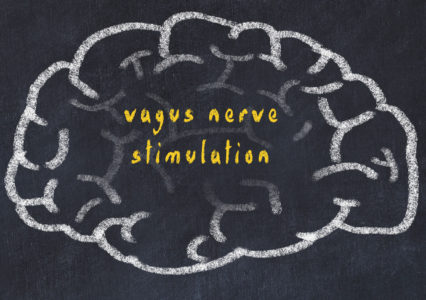
vagus nerveDaith piercings have been showing success in helping to control migraine headaches. Now there is new research that seems to shine more light on what has been thought to be the mechanism that contributes to the success of this treatment. Research into dementia has recently been done with stimulating the ear with a slight bit of external and intermittent vibration. The research suggests that this may help prevent dementia. The mechanism of action is thought to be by stimulating the ear, a branch of the vagus nerve is also being affected and this is what is producing the results. Similar to what we assumed was happening with the daith piercing, vagus nerve stimulation is the key factor at play.
The latest information on stimulating the ear and the vagus nerve comes from a study out of England and the University of Leeds (Bretherton et al, 2019, in Aging). Stimulating the outer ear for 15 minutes a day for two weeks with gentle electrical vibratory signals improved the relaxation signals and parasympathetic activity. The researchers determined that they were electrically stimulating a branch of the vagus nerve that is in the region of the tragus. In older people (55 years and older) they may have a high sympathetic outflow and this leads to stress, tension, depression and low energy. The transcutaneous electrical stimulation of the ear rebalanced the system and seemed to slow the effects of aging. The major caution was this was a small study so one does not know if these findings would be present in a large controlled study.

The initial research at the University of Leeds in England was done in 2015 and was done in healthy young people.  Stimulating the ear with transcutaneous electrical stimulation at the vagus nerve improved autonomic function. Normalizing autonomic function means decreasing sympathetic tone, stress, tension and most likely vascular tone.  This would also mean blood vessels would not constrict and could impact the occurrence of migraine headaches.

What It Means For Migraines  

Vagus nerve stimulation has a history that is long standing.  Vagus nerve stimulation devices were implanted after 2005 for treatment of major depression. They also have been used for gastro-intestinal disorders, epilepsy, and some inflammatory disorders. Now there is an FDA-approved device (GammaCore) to stimulate the vagus nerve through the skin to relieve migraine headaches.

Daith piercings we now know are not placebo treatments for migraine headaches. It is pretty clear they work through stimulating the auricular branch of the vagus nerve in the region of the tragus in the ear. Stimulating the vagus nerve will increase parasympathetic activity and decrease excessive sympathetic tone. This would likely decrease the vascular events that surround migraine headaches. Furthermore it may reduce overall personal stress and anxiety that may be migraine triggers. The piercing would cause physical stimulation of the vagus system and thus rebalance the autonomic nervous system in the body. If piercing is not an option, then using a transcutaneous nerve stimulator (TENs) unit with a very light current to the tragus unit would likely do the same. The good news is that science is validating the practice of this piercing.

As a side note, research is underway specifically on the daith piercing.  Studies are being done in England and elsewhere in Europe with regards to the effectiveness of this technique. Whether the daith piercing will work for any one individual is unknown. Since migraines may have a number of triggering causes, the effectiveness of the daith piercing is likely dependent on whether a component of the migraine is related to autonomic balance in the body and if it can be corrected with vagus nerve stimulation. Hopefully we continue to learn more about vagus nerve stimulation and how to best treat these types of migraines in the near future.

What Patients Wish They Would Have Known Earlier About Their Chronic Pain

chronic pain knownEverybody can look back at some aspects of their life and say “I wish I knew then what I know now.” The same can be said for anyone who is dealing with chronic pain or who has progressed through a pain management plan. Oftentimes life would have been so much easier if we just would have known a few things back then. That sentiment is the focus of today’s blog. We’re going to share some things that many patients with chronic pain wish they would have known earlier in the process, and hopefully they can help you come to an understanding earlier than you may have on your own.

If Only I Would Have Known Sooner

Here’s a look at some sentiments a lot of patients wish they would have come to grips with sooner. We understand these may not apply to every single situation, but at least a few points should apply to your pain problem.

1. Pain is not just physical – One of the biggest misconceptions about your chronic pain is that it’s only a physical issue. Pain has a way of impacting us physically, mentally and emotionally, and it can exhaust all aspects of our life. You can’t just focus on the physical aspect of your health, because ignoring your emotional and mental health will wear you down and leave you feeling worse off. Treating pain needs to be a multi-faceted approach that focuses on your total wellness. If you’re feeling anxious, tired or mentally or emotionally fatigued, bring this up to your care physician because taking care of these areas of your life will help your physical pain as well.

2. Pain isn’t always curable, but it is treatable – What we mean by this is that although we do everything in our power to completely rid you of your pain, there’s no guarantee that you will be completely pain free when all is said and done. That being said, we are extremely confident that we will be able to help decrease your symptoms or help you get a better handle of your pain condition, no matter what you’re dealing with. We’ve never met a patient that we’ve felt that we couldn’t at least make life a little better for. But it’s important to manage your expectations. Assume that things will get better, but understand you might not be back to a completely pain-free way of living.

3. It’s going to take work – As we’ve said on the blog in the past, there is no magic bill to treat chronic pain. Painkillers can help mask pain, but they won’t treat the underlying problem. Most pain conditions best respond to physical therapy, controlled exercise, weight management and other healthy lifestyle choices. This takes concentrated effort, but it’s worth it. If you just hope time heals all wounds, you may be surprised at how little progress you see.

4. Control what you can control – A final aspect we want to share is that you need to focus only on what you can control. You can’t control how your pain responds to treatment, but you can control the effort you put in to treatment. You can’t control your good and bad days, but you can control your attitude and mindset, even if it’s not always easy. Know that some things are out of your control, and that’s ok. If you focus on what you can control, you’re going to be in a better mental space, and it often leads to better physical outcomes.